Christian Marche
1935 - 2008
Photos
2 images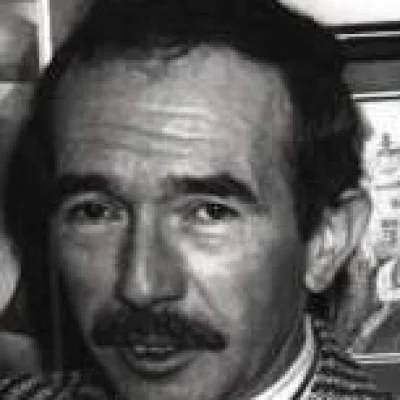
Biography
Christian Marche
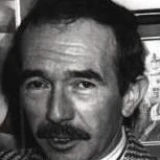
Christian Marche was born in Paris on
August 17, 1935
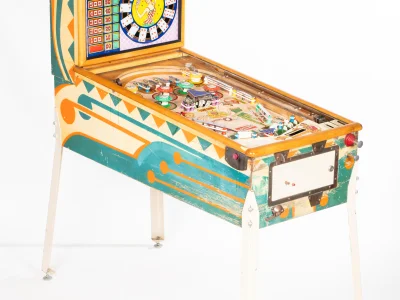
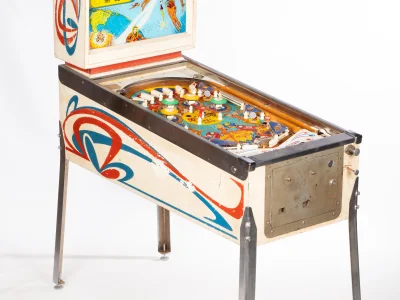
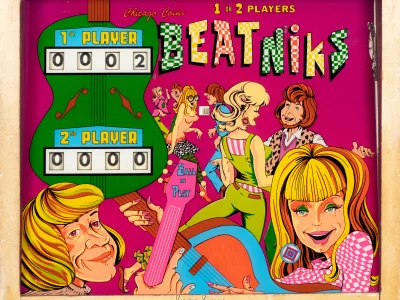
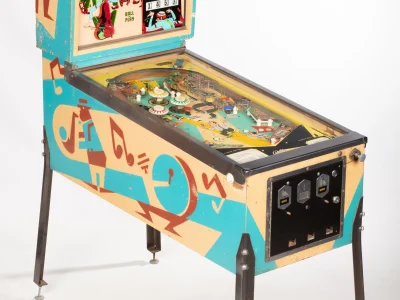
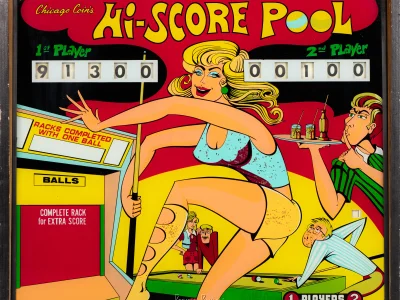
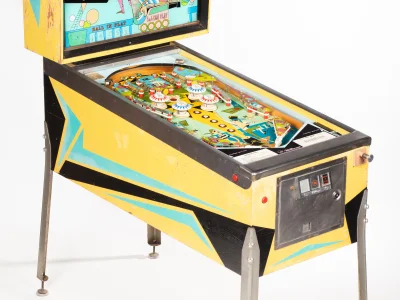
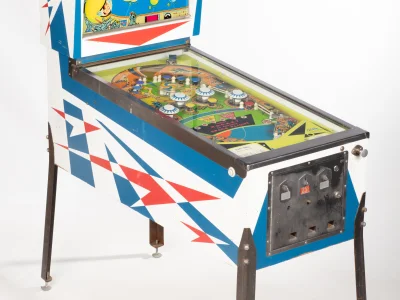
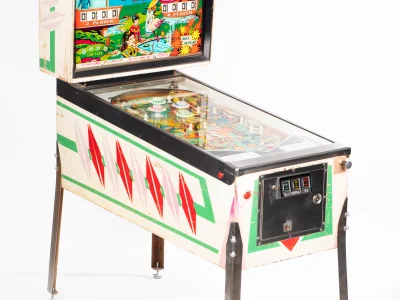
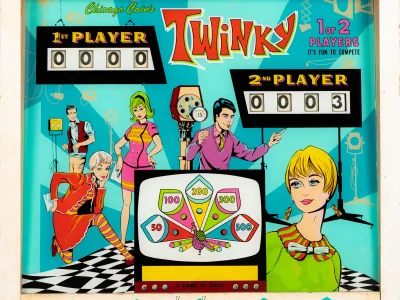
Christian Marche was the third most prolific pinball and arcade artist with over 150 games to his credit. Spanning 14 years in the business, only George Molentin and Roy Parker have done more pinball art than Marche. Starting in 1966 with Williams “Shangri-La” and ending in 1979 with Williams “Tri-Zone”, Mssr. Marche did work for Bally, Chicago Coin, United, Midway and Williams. He not only lent his hand to pinball, but also did many pitch and bats, puck bowlers, gun games, and other arcade coin op.
Although primarily known for his “Pointy People” style of angular cookie cutter art, he had many different influences and motifs in his work. The variety of his style can be realized when comparing works such as “Op Pop Pop” with “Bow and Arrow”.
Many favorites of his work are the space themed games like “Space Mission” and “Super Flite”. His style is such that you love it or hate it. Some people tend to regard it as “cheap” and there might be some validity to that. Back glass and playfield art are silk-screened onto their respective surfaces using inks and conventional processes. In the 60’s to 70’s, the art was drawn and then lithos were hand cut to photograph and create the screen used for each color. Some glass used more than 12 colors. Artists were under the gun to do it cheaply, perhaps creating the need for a speedy, less detailed version that would be easy to cut out and produce. The pinball companies were using Advertising Posters, the company in Chicago who pretty much invented glass screening. George Molentin was the primary artist and in 1961, he became the company’s Art Director.
Ironically, Marche was hired by George Molentin himself, and became friends with him, having lunch every week. The company hired many artists such as Gottlieb’s 70’s artist, Gordon Morison, whom Marche shared a studio with.
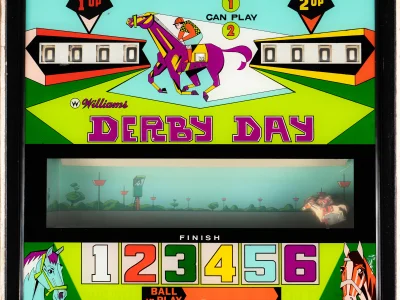
When you look at the volume of work Marche created in such a short time, you can see why he was getting all the work. Big companies like Bally were tired of paying the high price artists like Jerry Kelley so they greased the way for Marche’s quick talents and he slid into the job seamlessly. Some fans have a hard time distinguishing between the two’s angular, highly stylized art. Oddly enough, the very first Pointy People art was from the Jerry Kelly’s super stylistic “Pot O’ Gold” released by Williams in 1965. Marche’s first pointy style was tame by comparison, as seen in William’s “Derby Day” circa 1967. Supposedly, Jerry Kelly, originator of the “pointy people” said that Christian Marche was “forced” into copying his style. Marche was apparently agreeable to the arrangement as he began out-producing other artists at Advertising Posters. Marche continued working on many different projects and at some point, his work looked stretched a little thin.
However, he would always come through with a perfect glass like Gulfstream or Klondike, Bow & Arrow or Space Mission or his masterpiece in pointiness; Bally’s 1970 “Double Up. He worked for Advertising Posters from 1964 to 1979. With his wife ill, he returned to France so he could care for her.
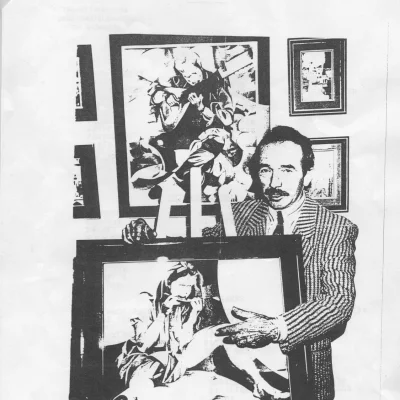
Marche retired to Corsica eventually and continued painting and selling art in his gallery/studio.
Christian Marche died on December 29, 2008 in Vivario, Corsica, France.
Pinball Machines
89 machines