George Molentin
1913 - 1994
Biography
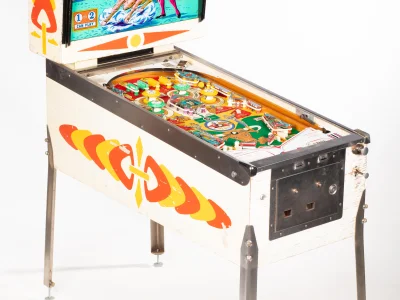
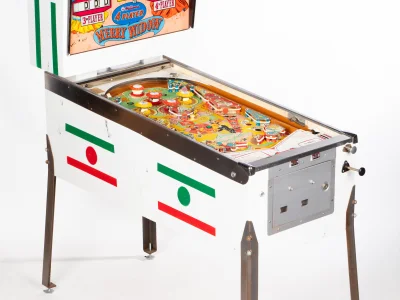
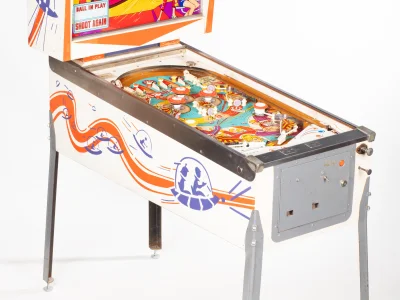
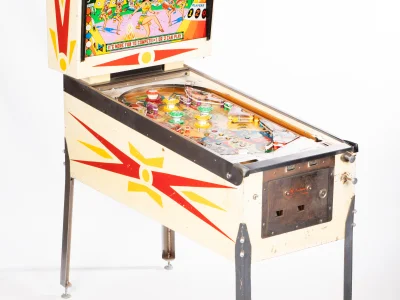
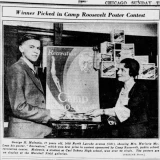
George Molentin (1913~1994) was the most prolific and influential artist in the history of the pinball industry. Often described as the "premier artist" for Williams during the 1950s and '60s, his work set a standard of realism for the "woodrail" era and transitioned the industry into the modern age of graphic design.
Early Life & Military Service
Born in Chicago, Illinois in 1913, Molentin grew up in the heart of what would become the pinball capital of the world. His professional life was significantly interrupted by World War II, where he served in the European Theater of Operations (ETO). His service was notably distinguished, as he participated in two of the war's most critical campaigns:
D-Day +2: Landing in Normandy shortly after the initial invasion.
Battle of the Bulge: Serving through the brutal Ardennes winter offensive.
Historians often note that these life experiences grounded his artistic style, lending a sense of "realism" and cultural gravity to his work that distinguished him from his more whimsical contemporaries.
Professional Career: The Master of Advertising Posters
Molentin was hired at the age of 21 by Thomas Grant, owner of Advertising Posters. George spent the vast majority of his career as a freelance artist and became Art Director for Advertising Posters in 1961. This firm was the powerhouse behind the graphic design of most major pinball manufacturers. Molentin produced art for many including PAMCO, Rock-ola, Exhibit Supply, Bally, Williams, United, Game Plan and others.
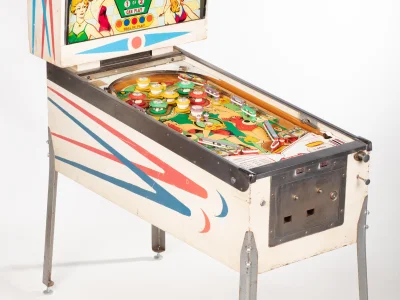
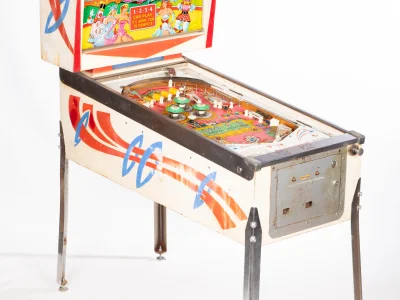
The Partnership with Harry Williams: Molentins most famous collaboration was with designer Harry Williams. Together, they produced nearly 200 titles. Harry famously preferred Molentin because George understood the "mechanical physics" of the machine, ensuring his art interacted perfectly with the light inserts and playfield components.
Leadership & Mentorship: As Art Director, Molentin managed the entire print production for the industry's giants. He mentored a new generation of artists, including Art Stenholm and Christian Marche, the latter of whom would go on to define the "Pointy People" style of the 1970s that was started by Jerry Kelley in 1965.
Artistic Style
Unlike the caricatured, "cheesecake" style of his peer Roy Parker, Molentin was known for:
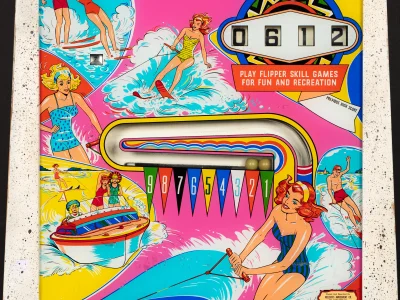
Anatomical Accuracy: His human figures were realistic and sophisticated.
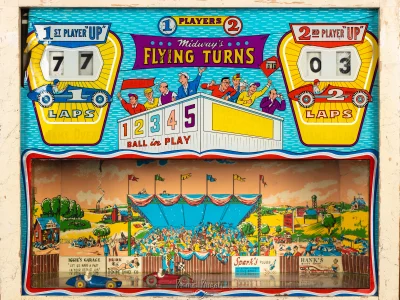
Story-Driven Themes: His backglasses often told a narrative, capturing 1950s cultural trends like baseball, aviation, and music.
Color Depth: He utilized advanced silk-screening techniques to create a "painterly" depth on glass that felt alive when back-lit, sometimes using up to 12 screens on a single glass..
Selected Iconic Works
Molentins portfolio includes over 500 machines. Most remain uncredited but his style was easily discernable from his contemporary, Roy Parker. Some of his most celebrated titles include:
Year Machine Manufacturer Theme
1934 World Series Rock-ola Purely mechanical baseball game.
1950 Lucky Inning Williams A definitive early baseball machine.
1951 Shoot the Moon Williams A classic "vulnerable beauty" sci-fi aesthetic.
1951 Control Tower Williams Reflects post-war aviation and military pride.
1954 Big Ben Williams Features sophisticated British tailoring and London scenery.
1963 Star-Jet Bally A high-energy, futuristic multiball machine.
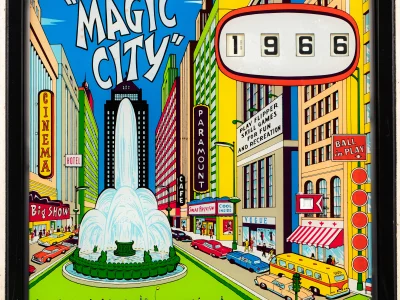
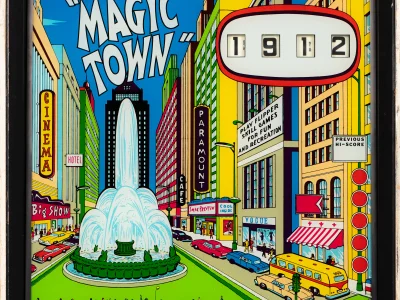
1967 Magic City Williams A late-career masterpiece of vibrant color.
Legacy
George Molentin is widely considered the "Godfather" of pinball art alongside Roy Parker. While he remained a private figure, his influence is visible in every arcade in the world today. His move from freelance illustrator to industry-wide Art Director ensured that even when he wasn't holding the brush, his "anatomical" and "realistic" standards guided the look of pinball for nearly four decades.****
Pinball Machines
99 machines