Ed Krynski
1927 - 2004
Biography
Biography of Ed Krynski
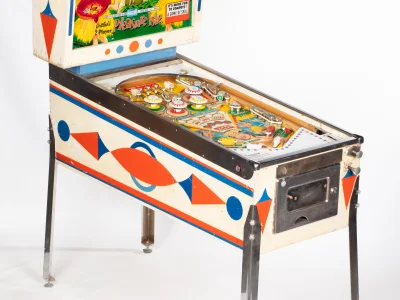
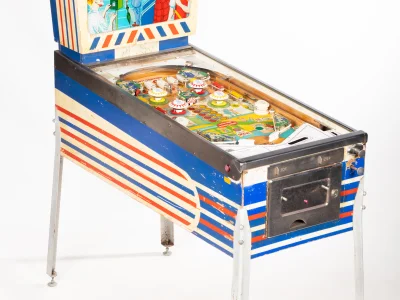
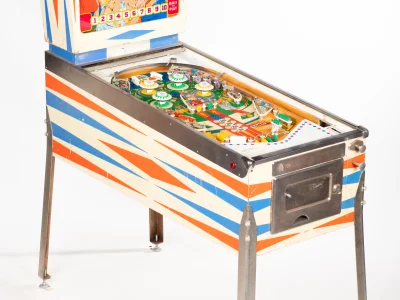
Edward Paul Krynski (September 12, 1927 – November 15, 2004) was a prolific American pinball designer who is widely regarded as one of the most influential figures in the history of the industry. His career spanned nearly three decades, during which he designed over 200 games, primarily for D. Gottlieb & Co.
Early Life and Career
Born in Illinois, Krynski served in the United States Navy during World War II. He entered the gaming industry in the 1950s, joining J.H. Keeney & Co. in Chicago. At Keeney, he developed various arcade machines, gambling devices, and shooting games. While he was highly productive, his work there was often uncredited, leading him to seek new opportunities. His first official pinball design credit was Hi Straight, released by Keeney in 1959.
The Gottlieb Era (1965–1984)
In 1963, Krynski joined D. Gottlieb & Co. at a pivotal moment. Long-time lead designer Wayne Neyens was moving into management as Chief Engineer, and Krynski was hired to take over as the company's primary designer.
Krynski thrived in Gottlieb's family-oriented environment, forming a legendary partnership with artist Gordon Morison. Together, they defined the look and feel of the "Gottlieb era" during the 1970s. Krynski was known for his "player-centric" philosophy; he focused on creating challenging yet fair playfield layouts.
Mechanical Innovations
Krynski was a tireless innovator who introduced several features that became industry standards:
Inlanes (Laneways): First introduced in Bank-A-Ball (1965), these guided the ball safely to the flippers, drastically changing ball control.
Vari-Targets: A mechanical target that awarded more points or bonuses the harder it was hit (debuted in Airport, 1969).
Carousel (Roto)Targets: Rotating targets that changed values or objectives (debuted in Dancing Lady, 1966).
Drop Target Banks: While drop targets existed, Krynski popularized the use of large banks of targets (seen in 2001 and Galaxie, 1971), which became a hallmark of Gottlieb machines.
Notable Machines
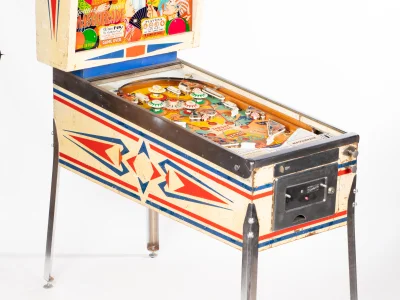
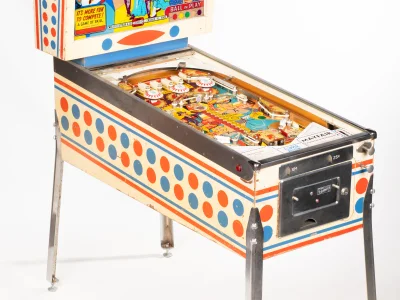
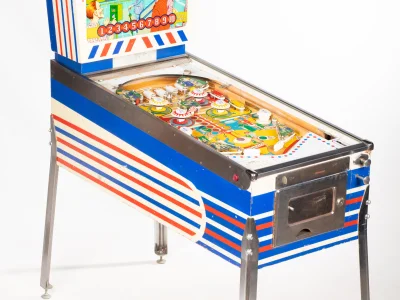
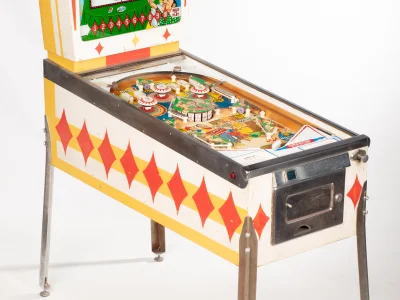
Krynski's portfolio includes many of the most collected and respected games in pinball history:
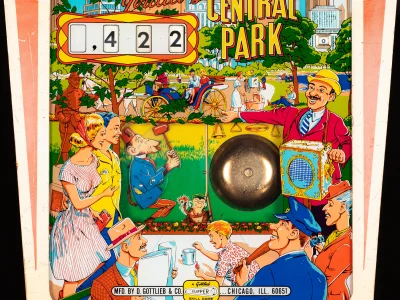
Central Park (1966): Known for its iconic bell ringing monkey animation.
Target Alpha / Solar City (1976/1977): Masterpieces of drop-target gameplay.
Royal Flush (1976): Widely considered one of the best-balanced electromechanical (EM) games.
The Amazing Spider-Man (1980): Gottlieb's first large-scale licensed solid-state hit.
El Dorado (1975): So popular it was remade multiple times (as Target Alpha, Solar City, and later El Dorado City of Gold).
Later Years and Legacy
The transition from electromechanical to solid-state (digital) games in the late 1970s, combined with the acquisition of Gottlieb by Columbia Pictures (Mylstar Electronics), led to a more corporate atmosphere that Krynski disliked. He famously noted that "Mylstar" sounded like "rat slime" spelled backward. He left the company in 1984 after completing El Dorado City of Gold. After his retirement, Krynski initially stepped away from the pinball community, refusing interviews for years. He eventually re-emerged in the early 2000s, sharing his history with historians and fans. In 2003, he was inducted into the Pinball Hall of Fame. He passed away in 2004 from complications related to cancer.