Mills Pinball Machines
The Mills Novelty Company of Chicago is legendary for its slot machines and jukeboxes, but its foray into the pinball market during the 1930s is a fascinating chapter where the lines between "amusement" and "gambling" were famously blurred.
The Payout Era (1930s)
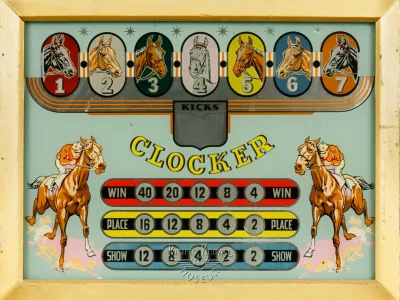
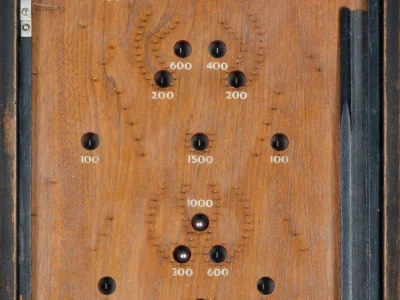
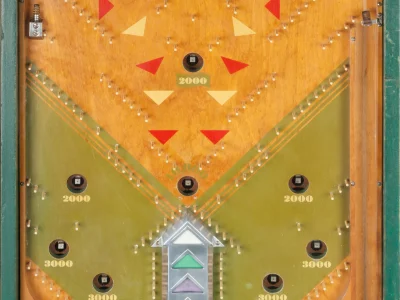
While many manufacturers focused on the "bagatelle" style of play for points, Mills leveraged its background as a premier slot machine manufacturer to dominate the payout pinball market. Their machines were often "one-ball" games where the objective was to land a ball in a specific hole to trigger a mechanical or electrical payout of nickels or tokens.
Key Characteristics & Innovations
The "Tycoon" (1936): Perhaps their most iconic pinball contribution, the Tycoon was a single-ball payout machine. It allowed players to wager multiple nickels (up to seven) to increase potential winnings, essentially acting as a slot machine in a pinball cabinet.Cabinet Design: Mills machines were known for their robust, high-quality wooden cabinets and Art Deco aesthetics, often featuring the famous "Owl" logo that signaled high-end manufacturing.
Mechanical Sophistication: Drawing from their experience with the Violano-Virtuoso, Mills integrated complex clockwork and electrical timers (dashpots) to control game flow and payout mechanisms.
The Mills "pinball era" was relatively short-lived compared to their half-century of dominance in slots. By the mid-to-late 1930s, the company faced significant pressure.
Legal Crackdowns: Because Mills machines like the Tycoon and Equity paid out cash or tokens, they were frequent targets for "anti-gambling" crusades, most notably by New York City Mayor Fiorello La Guardia.
Market Pivot: As the 1940s approached, Mills shifted focus toward their "Panoram" movie machines (early music video players) and their massive jukebox line (e.g., the Throne of Music and Empress).
Wartime Shift: Like most Chicago manufacturers, they pivoted to military production in the early 1940s, changing their name to Mills Industries, Inc. in 1943. Mills remains a vital part of pinball history for defining the high-stakes, mechanical payout games of the Great Depression era.