
Backglass History
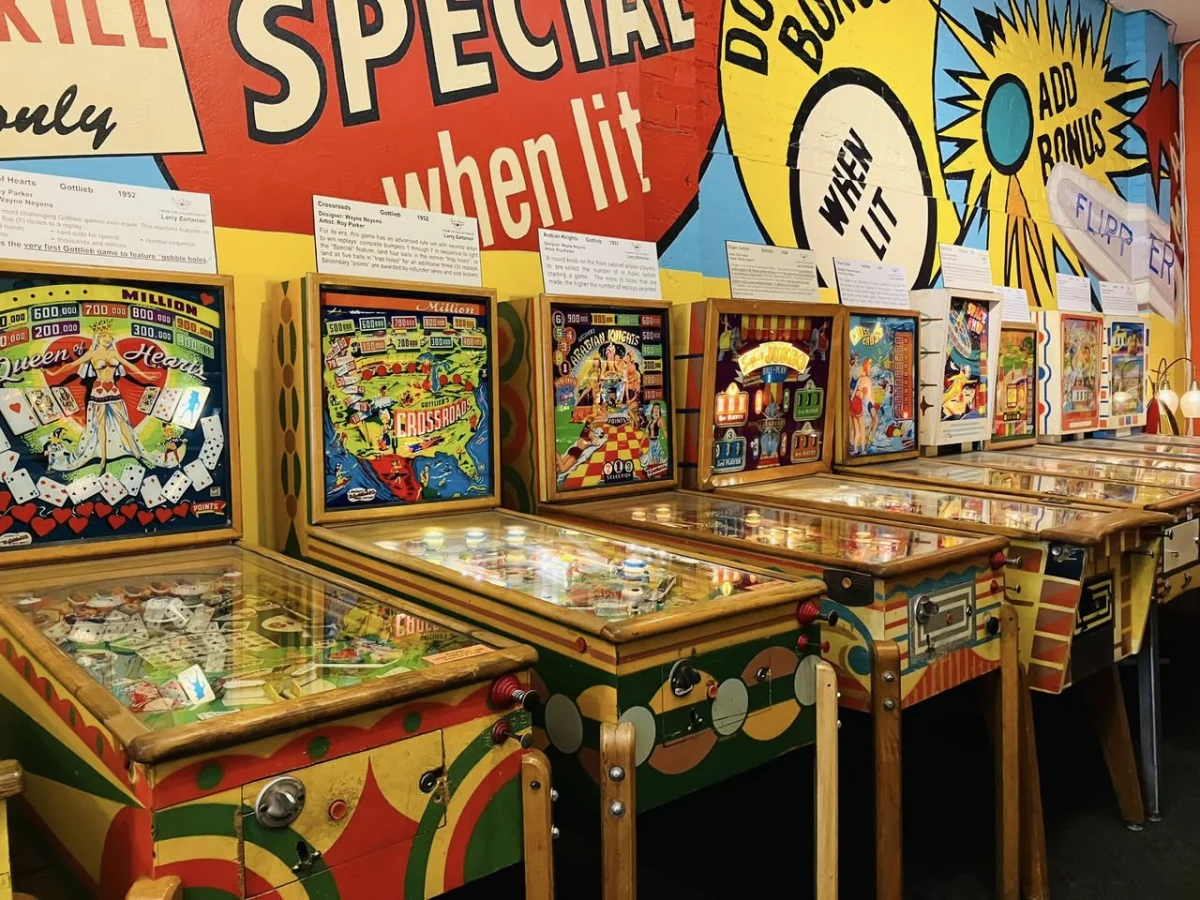
The backglass is the face of a pinball machine—designed to attract players and stand out in a crowded arcade. From early nameplates and score cards to Ed Fey's pioneering lighted backbox, this is the story of how the backglass evolved into an essential piece of pinball's anatomy.
The focal point of pinball art is usually the backglass. It’s the face of the game, the entry point designed to attract a player and stand out in a crowded environment. Though now an essential piece of a pinball machine’s anatomy, the backglass has transformed tremendously since its introduction in the 1930’s.
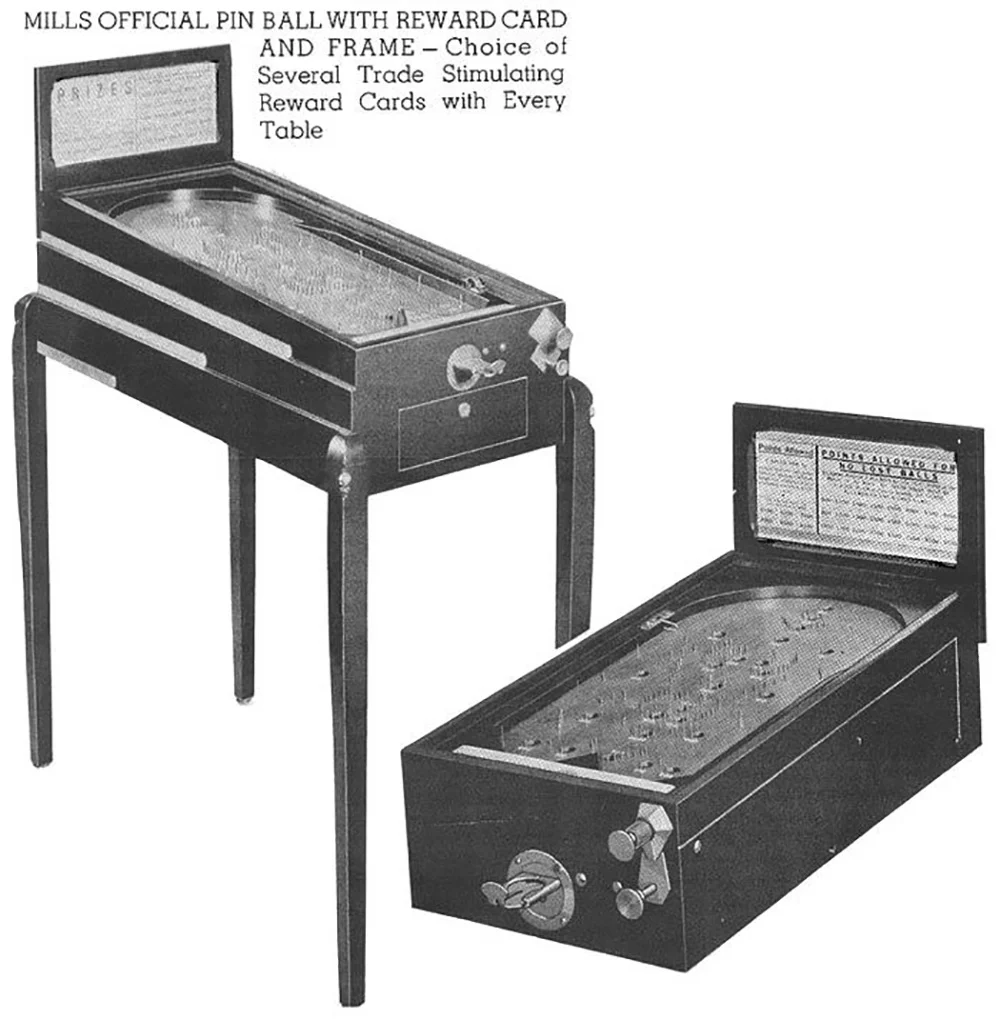
The first pinball machines had no backglass at all. These were usually mechanical tabletop games with no electricity. We see the forerunners of the backglass with nameplates and score cards, sometimes referred to as a marquee. The Mills Official pingames were an early example of this, often featuring a scorecard in a vertical stand at the back of the machine that provided payout values for the points scored by players.
Like many industries just starting out, pinball was full of rivalries and copycats in the 1930’s. With each new development, competitors would borrow inspiration from one another as each new game hit the market. Securing patents could be a lengthy process, and new features would often become obsolete shortly after their introduction.
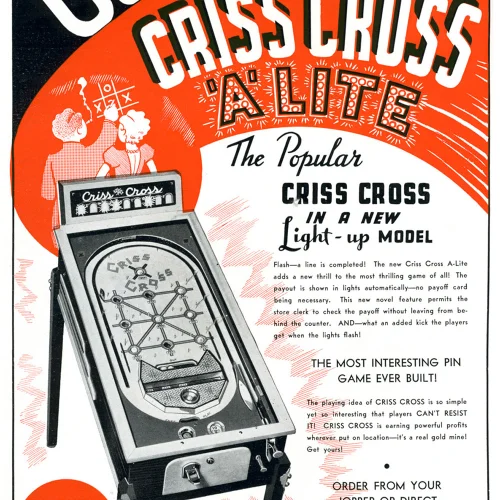
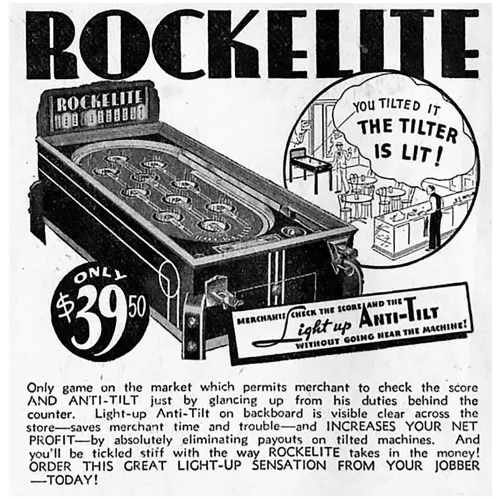
An important innovation came by way of San Franciscan Ed Fey, who operated a number of coin-operated machines at Playland at the Beach in the 1930’s. The son of automatic slot machine inventor Charles Fey and an inventor himself, Ed Fey patented a lighted backbox with a totalizing scoring system for pingames that pushed the backglass closer to its modern form. By 1935, games like Genco’s Criss Cross A Lite and Bally’s Rockelite had built on the idea with larger backglasses and bulb-illuminated score displays.
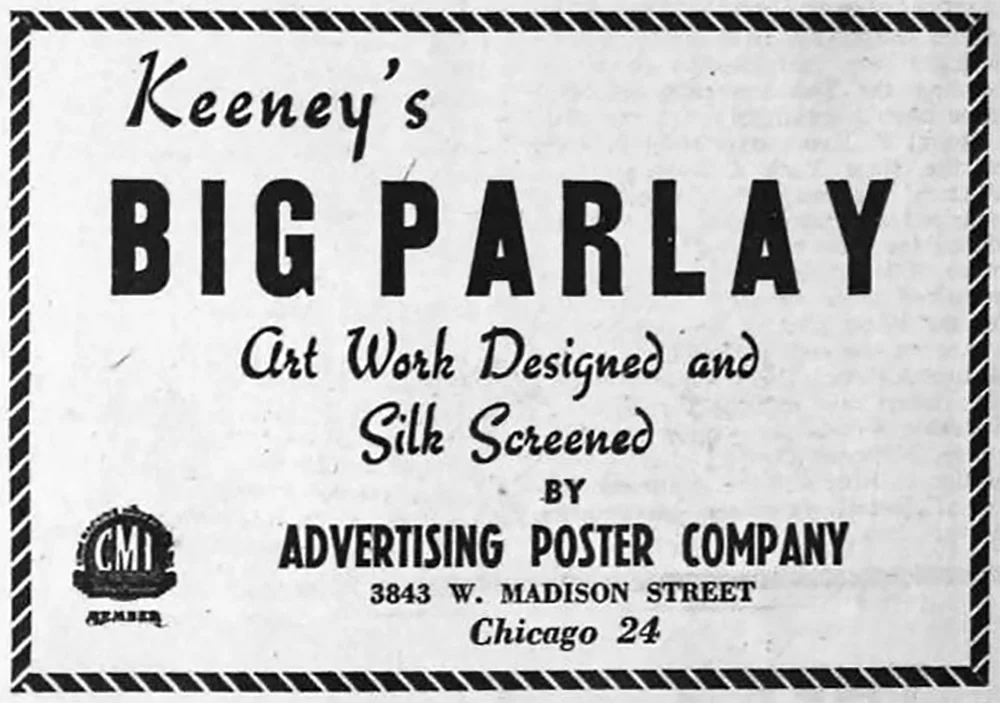
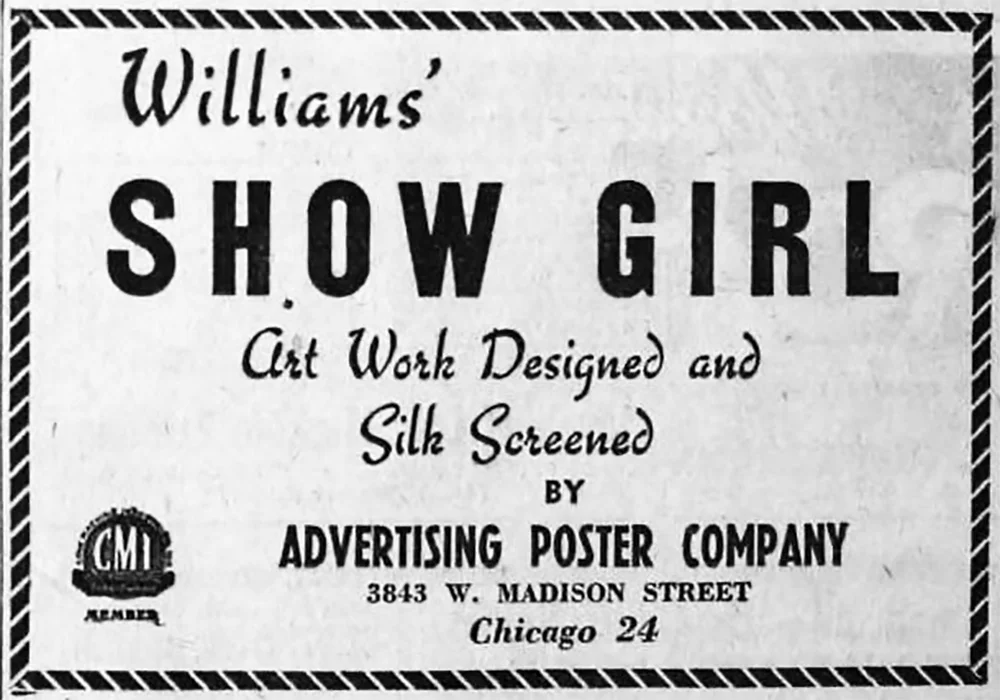
In the early 30’s, Bally founder Ray Moloney discussed the possibility of screen printing graphics directly onto glass with Tom Grant, co-founder of commercial art firm Advertising Posters. While Gottlieb handled their own screenprinting up until 1936, pinball companies generally didn’t have in-house art departments until the mid 70’s. Instead, they contracted with commercial art firms to produce artwork for games. Advertising Posters’ main competitor was another Chicago-based outfit, Reproduction Company, but fires eventually drove them out of business for good by the late 50’s. With no major competitor remaining, Advertising Posters would become the primary commercial art contractor for nearly all pinball art for decades to come.
Right off the bat Moloney saw the attractive value of color as a powerful advantage in getting his games noticed. The playfield on Ballyhoo borrowed a color scheme from a popular satirical magazine Maloney saw at a newsstand. In stark contrast to the deep green of Baffle Ball and natural wood of Whiffle, Ballyhoo stood out with bright colors that were hard to ignore. Illustrated scenic playfields on Sportsman by O.D. Jennings in 1934, Goldrush by Rockola, and Pearl Harbor by Mills in 1935 all seem to indicate a growing number of manufacturers saw artwork as a valuable feature for their machines.
As examples of small backboxes appear in 1935, illustrations begin to carry through to the backglass. Manufacturers like Genco and Daval, along with smaller ones like International Mutoscope Reel, released games with comparatively large backglasses for the time as the industry experimented with format. With an increasing number of technical components required inside the backbox, backglasses began to grow in size. The larger backbox allowed for more involved graphics on the glass and the trend toward illustrated pinball had even more room to take off.
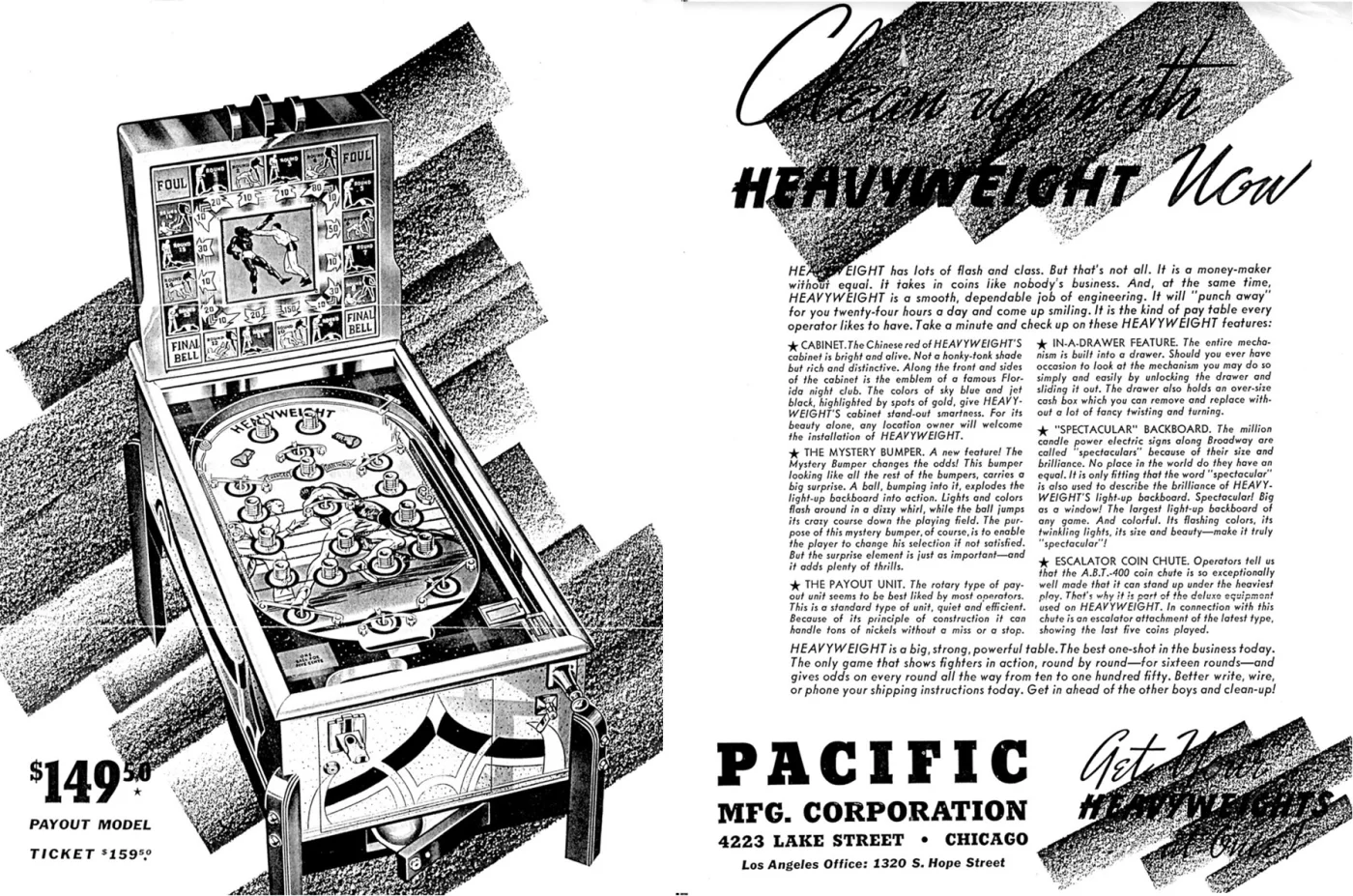
In 1937, numerous games more closely resembling the proportions of a modern pinball machine hit the market. Pamco released Heavyweight in April, along with several others that year featuring large backglasses. The flier for Heavyweight boasts, “Big as a window! The largest light-up backboard of any game.” By the end of the year, every major manufacturer had a game with the large format backglass, establishing artwork as an essential part of pinball and a powerful means of attracting players.
Only two artists are credited for the art on nearly every game released through the 1950’s; Leroy (Roy) Parker and George Molentin. While working at Advertising Posters, Molentin created the art for almost every Williams game up until 1961. Parker, working at Reproduction Company, made the art for Gottlieb and Chicago Coin games. After the fires that destroyed Reproduction Company, Parker moved to Advertising Posters and became the exclusive artist for Gottlieb. It’s hard to know definitively what artists worked on games for the smaller companies, but at one point Advertising Posters was contracting with almost 30 manufacturers. Advertising Posters sometimes ran ads citing their work on newly released games, including those for Exhibit and Keeney.
It’s important to note that while only 2 artists are credited for most of those early games, the design and production process required many talented men and women to deliver a final product. From pencil sketches, artwork was mocked up on vellum, inked, lettered, and delivered to the screen makers. The screenprinting process in those days required separate hand-cut screens for each color printed, sometimes up to 16 on a single game. The labor-intensive process paired with a busy production schedule required fast, accurate work by these commercial art firms and their skilled employees.
In the years that followed, pinball art would change dramatically. Paul Faris would help Bally move to the 4 color print process, which allowed for more realistic shading and blends in color. Plastic film translites would replace artwork directly printed on backglasses. Perhaps the biggest shift was not in technique, but content as more game themes moved toward licensed properties over standalone games. Nevertheless, artwork remains an integral part of pinball, steering our attention and enticing us to play the game.